
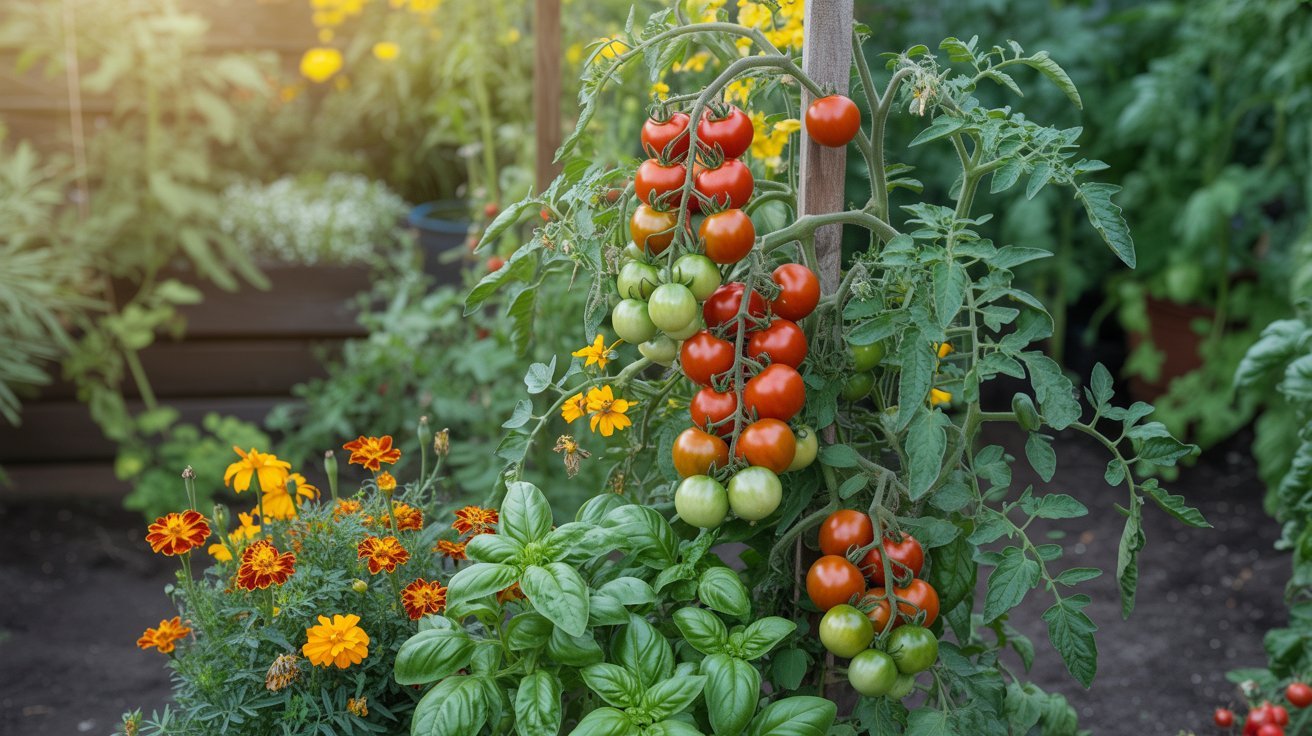
Companion planting is a smart gardening technique that improves tomato growth naturally. Planting tomatoes with specially chosen Companion Plants for Tomatoes improves flavor, repels pests, and attracts pollinators. A few of the best are basil, which flavors and repels hornworms; marigolds, which repel nematodes and whiteflies; carrots, which break up soil; and borage, which attracts pollinators and repels pests. Companion planting of these vegetables optimizes soil, invites beneficial insects, and results in healthier, more productive tomato plants—without the use of chemicals.
Introduction
Tomatoes stand out in backyard gardens, bathed in their juicy fruits and deep color. But cultivating them will work with more than sunlight and water. Many gardeners will experience the agitation of pests, disease, or low yields—it is a gamble.
The secret isn’t really in the dirt or the compost—it’s the neighbors you surround your plants with. Companion planting, planting certain flowers, herbs, and vegetables around tomatoes, promotes growth organically, tastes superior, detains pests, welcomes pollinators, and enriches the soil. Basil wards off hornworms, marigolds deter nematodes, carrots loosen the soil, and borage welcomes pollinators, so your garden is strong and robust.
By carefully selecting the perfect companion plants, you can harvest your crop without chemicals, boost yields, and taste healthier, better tomatoes all year around. Companion planting turns your garden into a cooperative environment where every plant benefits the others, making it simple for you to harvest the best tomato crop.
What is Companion Planting?
Companion planting is just putting plants together so they help and support one another—good neighbors in a peaceful neighborhood. Some plants add nutrients to the soil, provide shade, keep pests away, or attract pollinators, all working together to create a healthy, productive garden. With tomatoes, it is a simple, non-chemical method for encouraging growth and getting better yields. By planting a variety of crops at once instead of isolated monocultures, gardeners are able to enjoy healthier, more vigorous gardens year after year.
The Benefits of Companion Planting
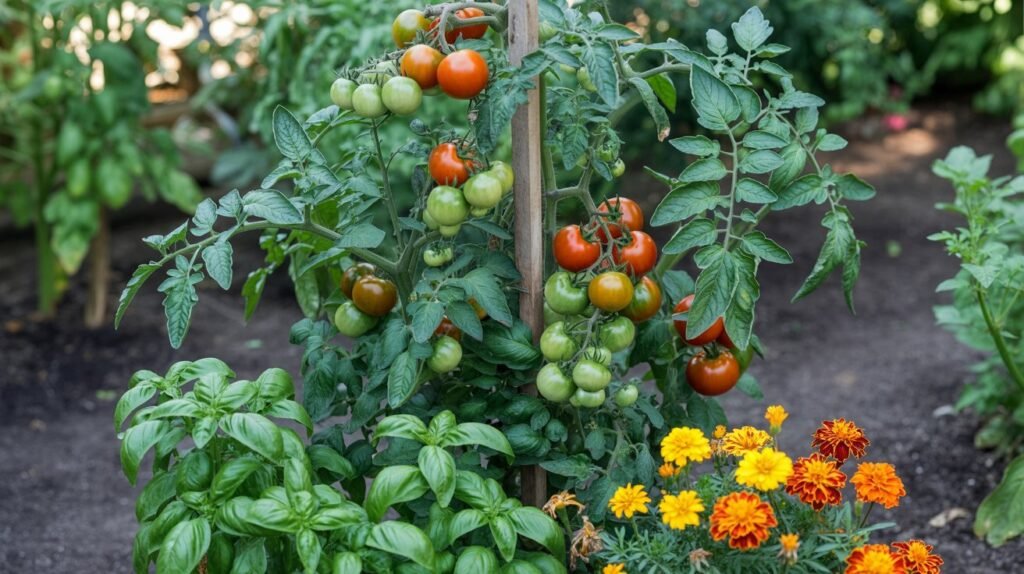
Why should you consider companion planting when using a simple fungicide or insecticide seems easier? The benefits go far beyond pest control. They lead to a better garden and higher-quality food.
- Natural Pest Control: Some herbs and flowers release scents that confuse or repel harmful insects, such as the tomato hornworm and whiteflies.
- Disease Suppression: Some companions, like garlic, have natural antifungal or antibacterial properties that help keep soil-borne diseases in check.
- Improved Flavor: It’s a hotly debated topic, but many gardeners swear that aromatic herbs, such as basil, actually enhance the flavor of their nearby tomatoes. I’ve personally run the taste test, and the basil-grown tomatoes always win!
- Soil Health & Structure: Deep taproot vegetables (like carrots) open up tight soil, allowing improved water and nutrient uptake for the tomato plant’s shallow roots.
- Weed Suppression: Low-growing, spreading companions smother the soil with living mulch, suppressing weed seeds from germinating and shading out the sunlight.
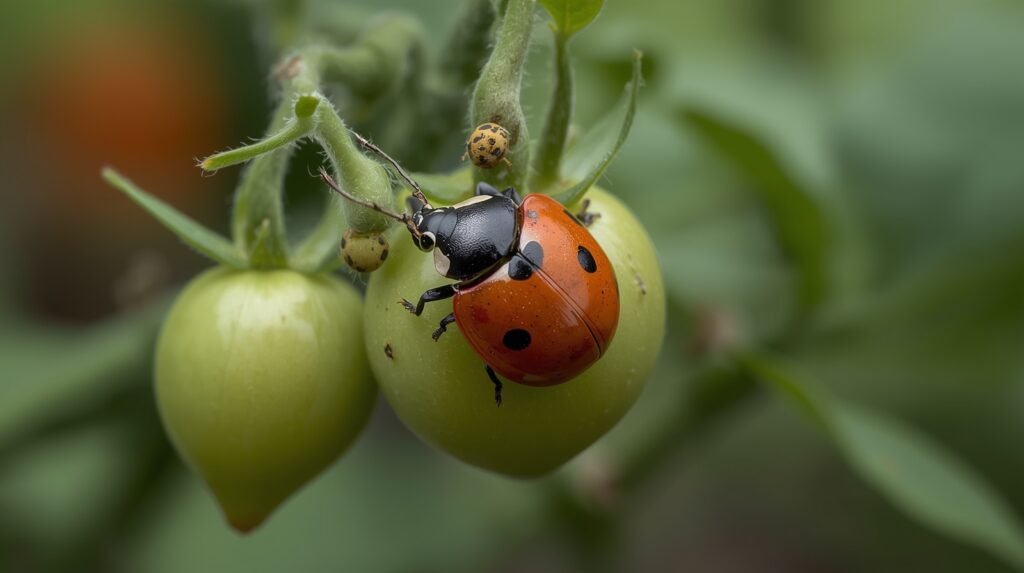
- Beneficial Insect Attraction: Open, broad flowers (like dill or yarrow) are irresistible to beneficial insects (ladybugs, lacewings) and primary pollinators (bees, hoverflies).
How Tomatoes Grow Best
Tomatoes need:
- Full sun (6–8 hours/day)
- Well-draining soil with pH 6.0–6.8
- Regular watering at the base
- Support from stakes or cages
- Space for air circulation to prevent disease
It is possible to improve these growing conditions by using companion plants.
Best Herbs for Healthier, More Productive Tomatoes
These aromatic herbs are powerhouse companions, offering natural pest control, potential flavor enhancement, and soil benefits directly to your tomato plants.
1. Basil (Ocimum basilicum)
- Primary Benefit: The absolute no 1 companion for tomatoes, enhancing both the health and potential flavor of the fruit.
- Pest Control: Its strong, pungent aroma effectively repels key pests, including tomato hornworms, whiteflies, and mosquitos.
- Planting Strategy:
- Plant at a ratio of at least one basil plant for every tomato plant.
- Position it close to the tomato base (6 to 12 inches away).
- Tip: Regularly pinch back basil flowers to keep the plant bushy and concentrate the aromatic oils responsible for pest repulsion.
2. Parsley (Petroselinum crispum)
- Pest Control: When allowed to flower (or “bolt”), its umbrella-shaped bloom attracts beneficial wasps and hoverflies that prey on harmful pests.
- Soil Health: Possesses a deep taproot that naturally loosens compacted soil, improving water penetration and aeration for the tomato roots.
- Planting Strategy:
- Plant it approximately 8–10 inches away from the main tomato stem.
- Allow a few plants to go to seed in mid-summer to feed the beneficial insects.
3. Borage (Borago officinalis)
- Pest Control: Acts as a deterrent for large, destructive pests like the tomato hornworm and cabbage worms.
- Soil Enrichment: Its deep root system works as a mineral accumulator, drawing up vital nutrients (like calcium) from deep in the soil and depositing them on the surface as the leaves decompose.
- Planting Strategy:
- Plant just one or two plants nearby; Borage is a large plant that can shade the tomatoes if overplanted.
- Be aware that it is a vigorous annual and may self-sow aggressively the following year.
4. Dill (Anethum graveolens)
- Beneficial Insects: The mature flower heads attract critical natural predators, including ladybugs and parasitic wasps.
- Pest Management: Can serve as a trap crop for the tomato hornworm, drawing them to the dill instead of the tomato plant.
- Planting Strategy (Cautionary):
- Plant young dill early for maximum benefit.
- Crucial Tip: Harvest or cut back mature dill before it goes to seed near the tomato, as a large, mature dill plant can release compounds that stunt tomato growth.
5. Chives (Allium schoenoprasum)
- Pest and Disease Repellent: Emits a powerful sulfurous odor that repels soft-bodied pests like aphids and spider mites.
- Disease Prevention: Contains antifungal properties that may help suppress fungal issues like rust and blight in the surrounding soil.
- Planting Strategy:
- Plant them in small, dense clumps around the border of your tomato row.
- The dense root clumps also physically prevent weeds from emerging right next to the tomato stem.
Best Flowers and Vegetables for Tomato Protection
Here is a detailed breakdown of the best flowers and vegetables to plant with your tomatoes, focusing on soil health, pest defense, and moisture retention:
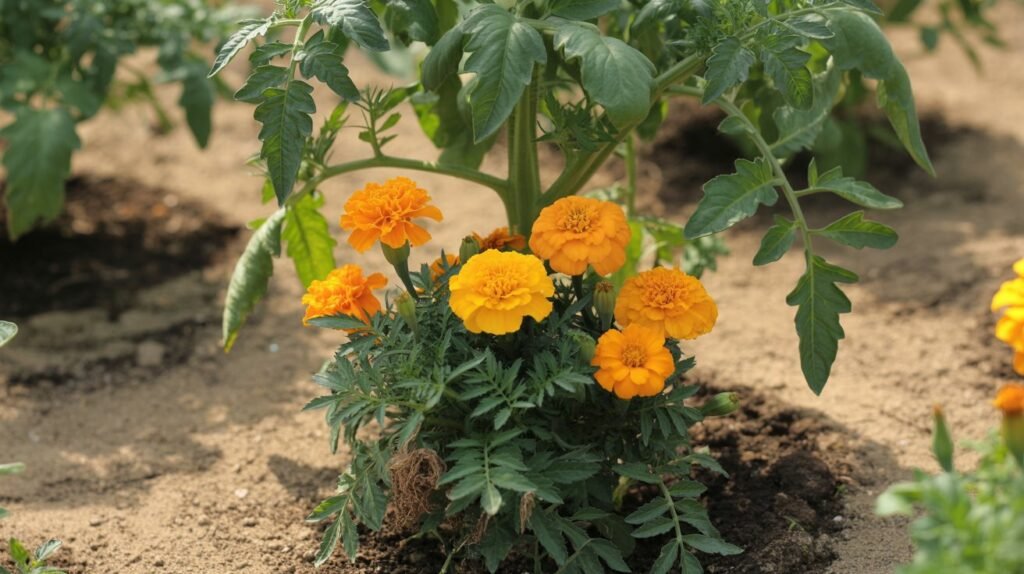
1. Marigolds (French Variety) (Tagetes patula)
- Primary Benefit: They are your essential soil pest fighter for tomatoes.
- Pest Control: The roots release a chemical that is scientifically proven to repel and suppress destructive root-knot nematodes in the soil, which otherwise attack tomato roots.
- Aroma Defense: The strong floral scent also helps deter flying pests like whiteflies and general aphids.
- Planting Strategy:
- Plant one French marigold (the best variety for nematode control) every 3 feet down the row.
- Position them close to the tomato base to maximize root-zone protection.
2. Nasturtiums (Tropaeolum majus)
- Pest Control: Functions as an effective “trap crop” for pests like aphids. Pests are drawn to the nasturtiums, leaving your valuable tomato plants alone.
- Weed Suppression: Their large, sprawling, umbrella-shaped leaves spread out quickly, forming a living mulch that shades the soil and helps suppress weed growth.
- Planting Strategy:
- Plant them at the edge of the bed and allow them to sprawl inward.
- Management Tip: Check the underside of the leaves regularly and manually remove the nasturtium plant if the aphid population becomes overwhelming.
3. Carrots (Daucus carota)
- Soil Health: The long, sturdy taproot breaks up hard clay soil and helps aerate the earth. This improves drainage and aids water penetration directly to the deeper-lying tomato roots.
- Nutrient Cycling: This root action makes it easier for the tomato plant to access moisture and nutrients.
- Planting Strategy:
- Sow the carrots 12–18 inches away from the main tomato stem. This distance ensures their root action is beneficial without causing too much competition for space.
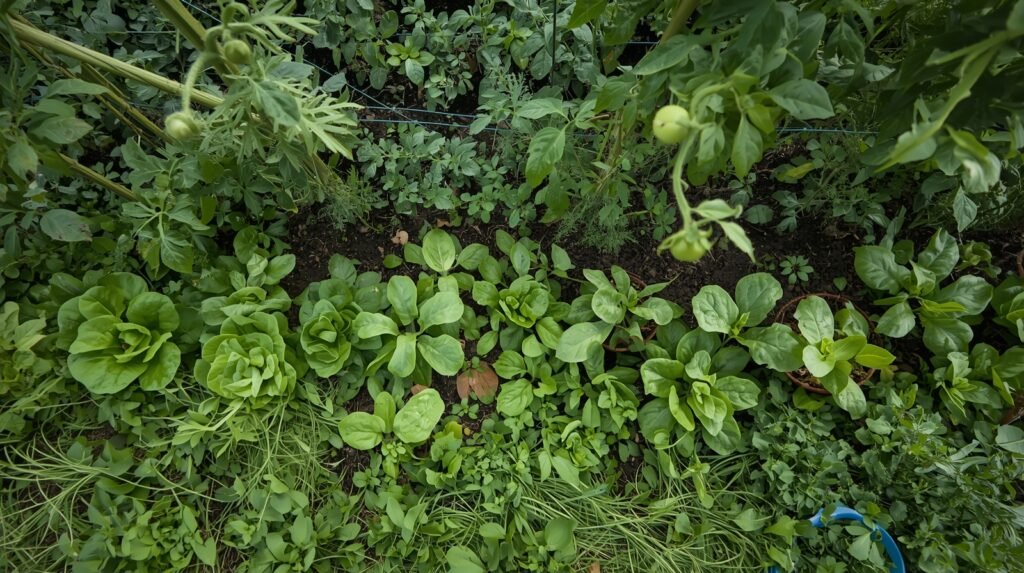
4. Lettuce (Lactuca sativa)
- Moisture and Cooling: Acts as a living mulch, shading the ground and keeping the soil cool and moist—a critical need for tomato roots during hot summer months.
- Weed Control: The wide, low-growing leaves effectively block sunlight from reaching the soil, preventing weed seeds from germinating.
- Planting Strategy:
- Plant low-growing varieties directly in the ground, utilizing the shade naturally created by the tall tomato plant canopy.
- This is an ideal use of space for early and late spring/early summer harvests.
5. Garlic (Allium sativum)
- Pest Repellent: A powerful general pest deterrent. Its strong scent repels pests like spider mites, whiteflies, and aphids by masking the tomato’s own scent.
- Disease Deterrent: Known for its antifungal and antibacterial properties, it helps keep soil-borne diseases in check.
- Planting Strategy:
- Plant a few cloves near the perimeter of your tomato row.
- For U.S. gardeners, the best time to plant garlic is late fall (before the ground freezes) for a summer harvest, but spring-planted garlic will still provide pest benefits.
Best Tomato Companion Plants for Attracting Pollinators and Beneficial Bugs
Attracting the good bugs is just as important as repelling the bad ones. These plants bring in predators like ladybugs and lacewings, which feast on the pests attacking your tomatoes.
1. Borage (Borago officinalis)
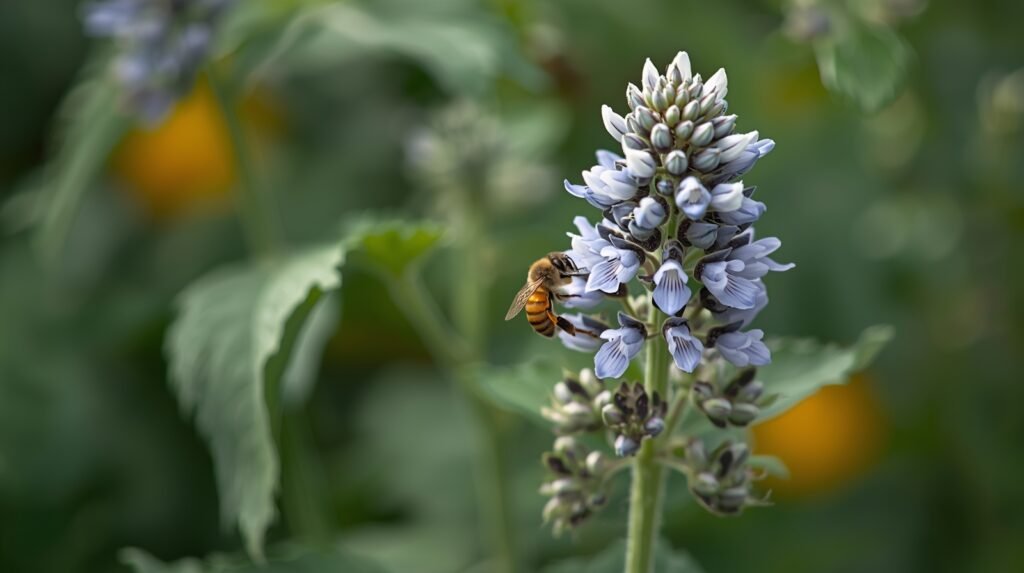
- Key Attractors: Highly attractive to Bees and Hoverflies due to its rich nectar supply.
- Tomato Benefit:
- The bees’ buzzing activity aids in buzz pollination, leading to better fruit set.
- Also acts as a deterrent for the tomato hornworm.
- Planting Tip: Plant one or two plants per tomato; Borage is an annual but readily self-seeds, making it a reliable addition year after year.
2. Marigold (French) (Tagetes patula)
- Key Attractors: Pollen attracts Hoverflies and general small predators.
- Tomato Benefit: Primarily known for repelling root-knot nematodes in the soil, but its blooms boost beneficial insect populations to control aerial pests like whiteflies.
- Planting Tip: Place plants close to the tomato base (6 inches away) to maximize nematode-repelling benefits in the root zone.
3. Alyssum (Sweet) (Lobularia maritima)
- Key Attractors: Tiny flowers are perfect food sources for highly beneficial Minute Parasitic Wasps and Hoverflies.
- Tomato Benefit: These tiny insects are crucial predators for controlling soft-bodied pests like aphids and whiteflies. Alyssum also acts as a low-growing living mulch.
- Planting Tip: Plant seeds or starts thickly as a low border around the tomato plants for a continuous cover and nectar source.
4. Dill (Anethum graveolens)
- Key Attractors: The flat flower heads (umbels) are ideal landing and feeding sites for natural pest predators, including Lacewings, Ladybugs, and Parasitic Wasps.
- Tomato Benefit: These predators consume aphids, insect eggs, and the larvae of harmful caterpillars.
- Planting Tip: Use young dill.
- Caution: Mature, tall dill can potentially stunt tomato growth, so harvest or cut back stems before they become fully mature and compete for resources.
5. Oregano (Origanum vulgare)
- Key Attractors: Flowers are highly attractive to Bees, Butterflies, and Hoverflies.
- Tomato Benefit: Provides an aromatic deterrent to some pests, and its consistent flowering boosts the overall presence of pollinators, improving fruit set.
- Planting Tip: Plant near the edge of the bed; it is a sprawling perennial that requires less frequent watering than tomatoes, so separation helps.
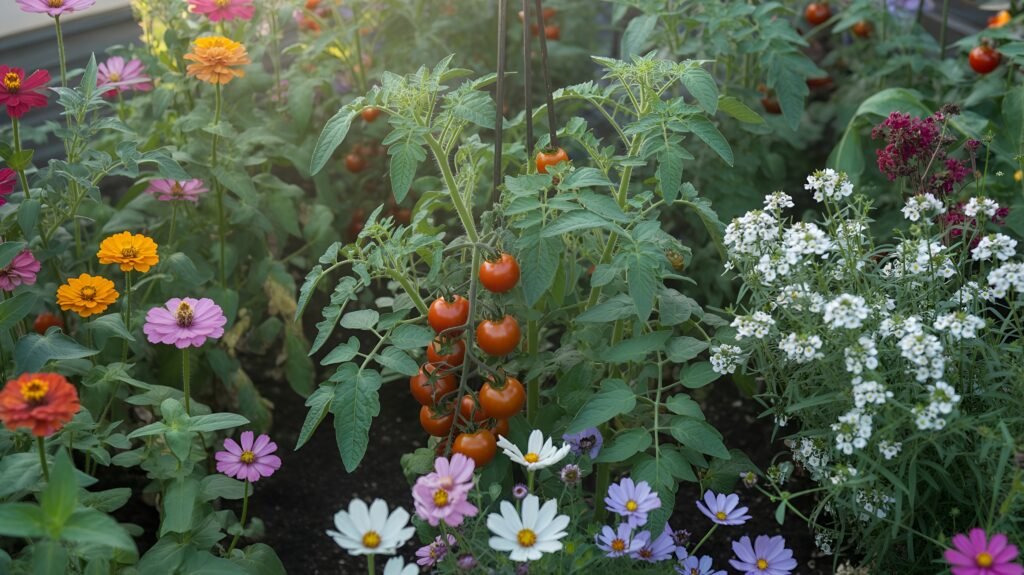
6. Zinnias (Zinnia elegans) and Cosmos (Cosmos bipinnatus)
- Key Attractors: Offer large, accessible blooms that draw a wide variety of Bees and Butterflies.
- Tomato Benefit: They act as colorful beacons, drawing large pollinators into the general garden area where they will inevitably visit tomato blossoms.
- Planting Tip: Plant them outside the immediate tomato row or on the north side to prevent the tall plants from shading your sun-loving tomatoes.
7. Lavender (Lavandula)
- Key Attractors: A long-blooming favorite of Bees and Butterflies, providing nectar throughout the season.
- Tomato Benefit: Repels common pests like whiteflies and spider mites with its strong scent.
- Planting Tip: Best planted in a nearby container or separate raised bed, as Lavender prefers drier, leaner soil compared to the rich, moist soil tomatoes require.
8. Calendula (Pot Marigold) (Calendula officinalis)
- Key Attractors: Attracts general pollinators and beneficial predators like Lacewings.
- Tomato Benefit: Can act as a trap crop for aphids, similar to nasturtiums, drawing them away from tomato foliage.
- Planting Tip: Plant in sunny spots near your main crop. The petals are edible and add color to summer salads.
9. Chamomile (Matricaria recutita)
- Key Attractors: Attracts Hoverflies and tiny beneficial Micro-Wasps.
- Tomato Benefit: Thought by some gardeners to act as a “plant doctor,” improving the health and flavor of vegetables planted nearby.
- Planting Tip: Plant as a low border; it is resilient and will not compete with tall tomato plants.
10. Catnip (Nepeta cataria)
- Key Attractors: Highly aromatic and an intense magnet for Bees and Butterflies.
- Tomato Benefit: Repels various garden pests due to its strong essential oils.
- Planting Tip: Container only! Plant in a separate, dedicated pot near the tomatoes. Catnip is aggressively invasive and will quickly overtake your garden bed if planted directly in the ground.
11. Sunflowers (Helianthus annuus)
- Key Attractors: Excellent for attracting large, “buzzing” Bees and Birds.
- Tomato Benefit: The buzzing activity helps release pollen, and the tall stalks can act as a natural windbreak or trellis.
- Planting Tip: Plant on the north side of your tomato patch to ensure they do not cast excessive shade on the fruit-producing tomato plants.
Best Tomato Companion Plants for a Weed-Free Garden
These plants help suppress weeds by shading the soil, preventing weed seeds from germinating, and simultaneously helping to keep the soil cool and moist—all things tomatoes love!
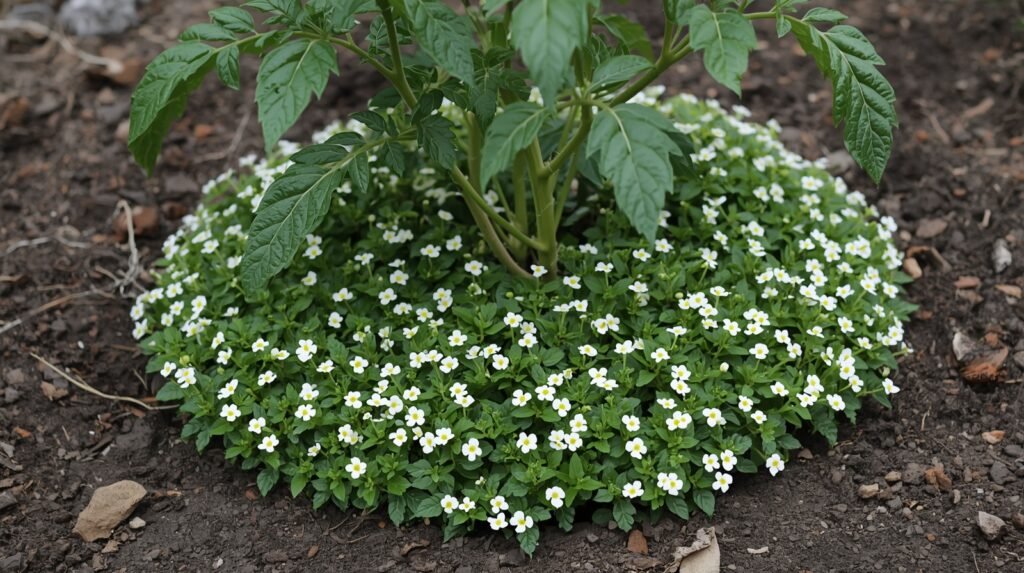
1. Sweet Alyssum (Lobularia maritima)
- Weed Suppression Method: Forms a dense, low, sprawling groundcover. Its compact growth quickly covers any bare soil patches.
- Additional Tomato Benefit: Attracts hoverflies and minute parasitic wasps (beneficial predators for aphids).
- Planting Tip: Plant it thickly along the borders or within the rows, allowing it to sprawl over the edge of raised beds.
2. Lettuce (Lactuca sativa) and Spinach
- Weed Suppression Method: Uses shading to suppress weeds. The wide, low leaves quickly cover the ground beneath the taller tomato canopy.
- Additional Tomato Benefit: Keeps soil cool and moist, which is vital for tomato root health during summer heat. Provides an early-season harvest before the tomatoes fully mature.
- Planting Tip: Plant low-growing varieties (like loose-leaf) in the shaded areas directly beneath the developing tomato canopy.
3. Nasturtiums (Tropaeolum majus)
- Weed Suppression Method: Provides vigorous, sprawling coverage. Their large, circular leaves form an effective, shady barrier against weed growth.
- Additional Tomato Benefit: Functions as a “trap crop” for pests like aphids, luring them away from your tomato plants.
- Planting Tip: Plant at the edge of the bed and allow them to trail inward. Check the undersides of leaves occasionally to manage pest buildup.
4. Borage (Borago officinalis)
- Weed Suppression Method: Features a large leaf canopy. Although it grows tall, its wide, fuzzy leaves cast substantial shade on the ground below the plant.
- Additional Tomato Benefit: Attracts bees (improving fruit set) and is known to deter the tomato hornworm.
- Planting Tip: Plant just one or two plants per tomato section, ensuring they don’t grow tall enough to shade the main tomato foliage.
5. Summer Savory (Satureja hortensis)
- Weed Suppression Method: Its bushy, dense growth fills in the spaces between plants, creating a physical barrier that leaves little room for weeds to establish.
- Additional Tomato Benefit: Repels certain harmful insects and is often cited to improve tomato flavor (much like basil).
- Planting Tip: Plant the compact herbs about 6–8 inches away from the tomato stem.
6. Squash/Zucchini (Winter or Summer)
- Weed Suppression Method: Offers vigorous vining and shading coverage. The huge, thick leaves of squash plants aggressively cover and shade the entire ground area.
- Additional Tomato Benefit: Acts as a natural insulator and moisture retainer in the soil.
- Planting Caution: Requires extra space, as they can compete heavily for water and nutrients. Best used in a planned arrangement (like a modified Three Sisters).
7. Chamomile (Matricaria recutita)
- Weed Suppression Method: When planted closely, these low-growing flowers form a soft mat that effectively suppresses small annual weeds.
- Additional Tomato Benefit: Attracts beneficial micro-insects and is traditionally thought to enhance the health of nearby plants.
- Planting Tip: Plant as a low border around the garden; it’s resilient and thrives in many conditions.
8. Oregano (Origanum vulgare)
- Weed Suppression Method: As a perennial herb, it develops a thick, spreading mat over time that effectively chokes out competing weeds.
- Additional Tomato Benefit: Attracts pollinators when flowering and provides an aromatic pest deterrent.
- Planting Tip: Plant at the edge of the bed where its spreading, perennial nature won’t interfere with annual crop rotation.
9. Cilantro/Coriander (Coriandrum sativum)
- Weed Suppression Method: Its fast, bushy foliage quickly shades the soil and fills in gaps during the cool season.
- Additional Tomato Benefit: Attracts beneficial hoverflies when allowed to bolt and flower.
- Planting Tip: Plant early. Since it bolts quickly in heat, it is an ideal short-season cover crop that provides weed control before summer takes hold.
10. Chives (Allium schoenoprasum)
- Weed Suppression Method: The tight, dense clump formation of chives physically prevents weeds from emerging right next to the critical area near the tomato stem.
- Additional Tomato Benefit: Deters spider mites and aphids with its powerful sulfur compounds.
- Planting Tip: Plant small, dense clusters about 8 inches away from the base of the tomato plant.
Avoid These Companion Plants for Healthy Tomatoes
Not every plant plays nicely. Placing these plants near your tomatoes can actually inhibit growth, invite disease, or compete too aggressively for water and nutrients.
1. Brassicas (Cabbage, Broccoli, Cauliflower, Kale, etc.)
- Reason: These are “heavy feeders” that compete heavily for nutrients, particularly calcium, which is vital for preventing blossom end rot in tomatoes. Competition can lead to stunted tomato growth and poor fruit set.
- What to Plant Instead: Plant these brassicas on the opposite side of the garden or in a bed designated only for heavy feeders.
2. Fennel (Foeniculum vulgare)
- Reason: It is allelopathic, meaning it exudes substances (toxins) from its roots that inhibit the growth and germination of almost all garden plants, including tomatoes.
- What to Plant Instead: Plant fennel only in a separate container, keeping it far away from the main garden beds.
3. Potatoes (Solanum tuberosum)
- Reason: Both are members of the nightshade family and are highly susceptible to the same fungal blights (especially Late Blight). Planting them together dramatically increases the risk of these diseases jumping between crops and wiping out your harvest.
- What to Plant Instead: Do not plant in the same bed. Practice crop rotation by keeping them in separate garden areas, and rotate their locations yearly.
4. Walnut Trees (Juglans spp.)
- Reason: Walnut trees release a toxic compound called juglone from their roots and husks, which is highly toxic and often lethal to tomato plants and many other garden vegetables.
- What to Plant Instead: Ensure your tomato bed is outside the walnut tree’s drip line (the area under the longest branches). Raised beds might offer some protection, but distance is best.
5. Corn (Zea mays)
- Reason: Corn is a heavy feeder and, more importantly, shares the same devastating pest: the tomato/corn earworm. Growing them together creates an ideal breeding ground for this pest. Corn is also very tall and can easily shade out sun-loving tomatoes.
- What to Plant Instead: Allow a separation of at least 5–10 feet. Instead of using corn, use sunflowers or trellises to create vertical space.
6. Eggplant and Peppers (Other Nightshades)
- Reason: Similar to potatoes, these plants are in the nightshade family and are vulnerable to the same fungal diseases and pests (like flea beetles), increasing the disease vector risk for your tomatoes.
- What to Plant Instead: If you must plant them together, ensure maximum spacing and use plenty of disease-repelling companions like chives and garlic nearby.
7. Mature/Seeding Dill
- Reason: While young dill is a good companion, once the plant grows large and goes to seed, it can compete vigorously for water and soil nutrients, potentially stunting the growth of nearby tomatoes.
- What to Plant Instead: Plant dill in containers or harvest the plant completely once it begins to flower, before the seeds fully develop.
8. Vining or Trailing Plants (Heavy Feeders like Pumpkins/Melons)
- Reason: These plants are aggressive, shallow-rooted heavy feeders that can compete with your tomato roots for water and nutrients, and their large leaves can quickly shade out the lower portion of the tomato plant.
- What to Plant Instead: Plant them with ample separation, or place them so their vines run away from the tomato patch.
9. Rosemary
- Reason: Rosemary has a significantly different care requirement; it prefers dry, lean, sandy soil, while tomatoes need rich, consistently moist soil. The optimal conditions for one will be detrimental to the other.
- What to Plant Instead: Plant rosemary in a container near the tomatoes (for pest benefits) or in a completely separate herb garden.
10. Mint (Unless Contained)
- Reason: Mint is notoriously invasive; if planted directly in the ground, it will rapidly spread through underground runners and choke out the shallow root systems of young tomatoes.
- What to Plant Instead: Plant mint only in a deep, buried container (with no drainage hole in the soil) next to your tomatoes to harness its pest-repelling aroma without the invasive spread.
Best Time to Plant Companion Plants for Tomatoes in the USA
Timing is critical for successful companion planting.
- Prep Time (4-6 Weeks Before Last Frost): Plant your slow-growing companions like Parsley or Carrots now, so they’re established before the tomatoes go in.
- Transplant Time (After Last Frost): Once the soil is warm and you transplant your tomato seedlings, put in the primary repellents: Basil and Marigolds.
- Mid-Season (June/July): Plant your “trap crops” like Nasturtiums or quick-growing Lettuce to help cool the soil and draw pests away as the tomato plants mature.
Remember, the goal is to have the companions mature enough to be effective protectors when the tomatoes are most vulnerable.
Key Consideration: USDA Zones and Last Frost Date
The single most important factor is your Last Expected Spring Frost Date.
- Tomato planting rule: Never plant tomatoes or tender companions outside until all danger of frost has passed and the soil has warmed (ideally above 60°F or 15.5°C).
- For most of the USA (Zones 5–7): Planting time is generally Mid-May to Early June.
- For the Deep South/Desert Southwest (Zones 8–10): Planting can begin as early as March to Mid-April.
Always consult your local extension office or use online resources to find your specific “average last frost date” before putting out any tender companion plants.
Those are four of the most critical mistakes a gardener can make when using companion planting! Avoiding these pitfalls will significantly improve your tomato health and harvest.
Here is a detailed breakdown of these common errors and how to prevent them:
Common Companion Planting Mistakes to Avoid
1. Planting Incompatible Companions
This mistake involves pairing plants that actively harm each other, usually through root competition, allelopathy (chemical warfare), or sharing diseases.
- The Error: Placing plants from the nightshade family together (like tomatoes and potatoes or tomatoes and eggplants) or planting tomatoes next to Fennel.
- The Consequence:
- Shared Disease: Nightshades are all susceptible to the same fungal blights, meaning if one plant gets sick, the disease will rapidly wipe out the whole group.
- Allelopathy: Fennel releases chemicals that are toxic to most garden plants, including tomatoes, stunting their growth.
- The Fix:
- Maintain Distance: Never plant potatoes or large groups of nightshades in the same bed as tomatoes. Practice crop rotation yearly to prevent soil-borne diseases from building up.
- Isolate Fennel: Plant Fennel only in a separate pot or bed far away from your main vegetable garden.
2. Overcrowding the Tomato Base
While “living mulch” is good, planting too many companions directly against the tomato stem can lead to competition, poor air circulation, and moisture issues.
- The Error: Planting too many aggressive herbs (like Borage or Dill) or flowers (like Marigolds) too close to the tomato stem or planting them so thickly they smother the tomato’s base.
- The Consequence:
- Nutrient/Water Competition: The companions steal water and nutrients needed by the tomato, reducing fruit production.
- Disease: Poor airflow creates a humid microclimate, leading to early onset of fungal issues like blight and powdery mildew.
- The Fix:
- Respect Spacing: Give the tomato root ball at least 12 inches of clearance on all sides. Plant small herbs like Basil or Chives closer (6-8 inches) but limit their number.
- Use Living Mulch Wisely: For low-growers like Alyssum or Lettuce, allow them to fill in the space after the tomatoes are established, not before, and ensure they don’t grow tall enough to block air circulation around the lower tomato leaves.
3. Ignoring Soil Nutrient Needs
Tomatoes are notoriously heavy feeders that require rich, consistent nutrients, particularly calcium and nitrogen. Planting companions that are equally demanding leads to competition and starvation.
- The Error: Planting two or more heavy feeders in the same small area, such as planting Brassicas (cabbage, broccoli) or Corn right next to tomatoes.
- The Consequence:
- Stunted Growth: All plants compete for the same limited nutrients, leaving the tomatoes small and unproductive.
- Calcium Deficiency: Competition for calcium can lead directly to Blossom End Rot (black sunken spots on the bottom of the fruit) on your tomatoes.
- The Fix:
- Feed the Soil: Use compost and aged manure generously. Always side-dress your tomatoes regularly throughout the season with a balanced fertilizer.
- Choose Strategically: Prioritize light-feeding companions (like Basil, Marigolds, or Alliums) or companions that add nutrients (like certain nitrogen-fixing beans) over heavy competitors.
4. Planting Too Late in the Season
The timing of companion planting is crucial, especially for companions designed to prevent early-season problems or those that require a head start.
- The Error: Waiting until mid-summer to plant companions like Marigolds (for nematode control) or Dill (for beneficial wasps).
- The Consequence:
- Ineffective Pest Control: If your Marigolds aren’t established when nematodes are active, their protection is lost. If your Basil isn’t planted when whiteflies first arrive, they will already be established on the tomato plant.
- Missed Benefits: Cool-season living mulches like Lettuce will bolt (go to seed) immediately in hot weather, failing to provide the shade and weed protection needed.
- The Fix:
- Plant with Tomatoes: Ensure all tender companions (Basil, Borage, Marigolds) are planted the same week you put out your tomato transplants.
- Plant Early: Sow seeds for cool-season or deep-rooted companions 2-4 weeks before your tomatoes go out, giving them a critical head start.
Conclusion
Embracing companion plants for tomatoes is more than just a trick; it’s a commitment to a healthier, more sustainable garden. By strategically planting allies like basil and marigolds, you are building a resilient ecosystem that fights its own battles. You’ll use fewer chemicals, see fewer pests, and—most importantly—reap a larger harvest of intensely flavorful, sun-ripened tomatoes.
Now it’s your turn: Which tomato companions are you going to try first?
Frequently Asked Questions
What is the single best plant to grow next to tomatoes?
The single best plant to grow next to tomatoes is Basil. It provides a triple benefit: it significantly repels common tomato pests like the tomato hornworm and whiteflies, is said to improve the flavor of the fruit, and doesn’t compete heavily for nutrients.
Do onions make good companion plants for tomatoes?
Yes, members of the allium family like onions and garlic are good companion plants for tomatoes. They help repel common garden pests, including spider mites and various borers, due to their sulfur compounds. Plant them slightly away from the tomato stem (about 12 inches) to avoid root competition.
How far apart should companion plants be from tomatoes?
For most companions like Basil or Marigolds, a distance of 6 to 12 inches from the tomato stem is ideal. This spacing is close enough to maximize their protective benefits but far enough to avoid competition for water and nutrients, and to allow for proper staking or caging of the tomato plant.
Do companion plants reduce pests naturally?
Yes, plants like marigolds, garlic, and nasturtiums repel harmful insects and attract beneficial predators.
Can companion plants improve tomato flavor?
Yes, herbs like basil and borage can enhance tomato taste and aroma.
2 Comments
Pingback: Raised Bed Garden – Avoid 5 Expensive Mistakes During Setup
Pingback: 20 Best Air Purifying Plants for a Healthier, Beautiful Home