
Introduction
Watering indoor plants sounds simple, but it’s the most common reason houseplants fail. Many people either water too often out of care or too little out of fear—both of which can harm plants.
The truth is, there is no single watering schedule that works for all indoor plants. Factors like plant type, light exposure, pot size, soil type, and even your home’s humidity all play a role in how often a plant needs water.
This guide will walk you through exactly how often to water indoor plants, how to tell when your plant needs water, and how to avoid the most common watering mistakes. By the end, you’ll understand how to care for your plants with confidence—no guesswork required.
Why Proper Watering Is So Important
Water is essential for plant health, but too much or too little can cause serious problems.
When watered correctly, plants:
- Absorb nutrients efficiently
- Maintain healthy root systems
- Produce strong leaves and steady growth
When watering is done incorrectly:
- Roots can rot from lack of oxygen
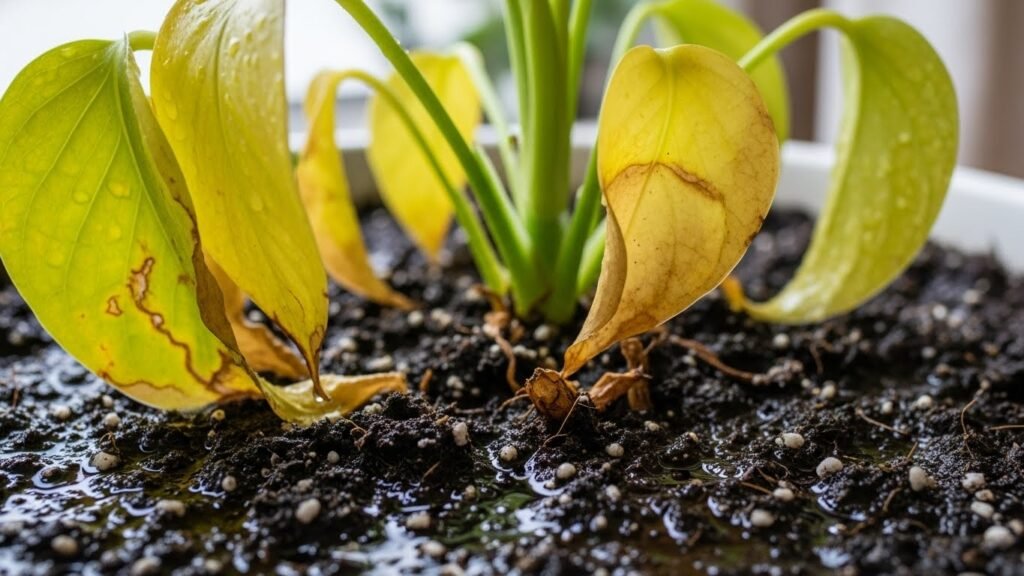
- Leaves may yellow, wilt, or drop
- Growth slows or stops entirely
Understanding how watering works is the foundation of successful indoor plant care.
According to the University of Minnesota Extension houseplant watering guide, plants should be watered based on soil dryness rather than strict schedules.
How Often Should You Water Indoor Plants?
There is no universal schedule that works for all plants. Instead, watering frequency depends on several factors:
- Plant species
- Pot size and material
- Soil type
- Indoor temperature and humidity
- Light exposure
Below is a reliable breakdown based on plant categories.
1. Low-Light & Drought-Tolerant Plants
Examples: Snake plant, ZZ plant, pothos, cast iron plant
These plants store water in their leaves or roots and are very forgiving.
How often to water:
Every 2–3 weeks, or when the top 2–3 inches of soil are completely dry.
Tips:
- Overwatering is the biggest threat
- Let soil dry out fully before watering again
- Ideal for beginners and low-light spaces
Read our guide on overwatered plants
2. Medium-Light Indoor Plants
Examples: Spider plant, peace lily, philodendron
These plants prefer slightly moist soil but dislike sogginess.
How often to water:
Every 7–10 days, depending on temperature and humidity.
Tips:
- Reduce watering in cooler months
- Water when the top inch of soil feels dry
3. Bright-Light & Tropical Plants
Examples: Monstera, fiddle leaf fig, calathea
These plants grow faster and require more frequent watering.
How often to water:
Every 5–7 days, depending on light and pot size.
Tips:
- Maintain consistent moisture
- Use well-draining soil
- Never let plants sit in standing water
How Seasons Affect Watering Frequency
Spring & Summer
- Active growth period
- Plants use more water
- Check soil moisture every 2–3 days
Read our guide on Spring Gardening
Fall & Winter
- Growth slows significantly
- Reduce watering frequency
- Allow soil to dry more between waterings
Most indoor plant deaths happen in winter due to overwatering.
Read our guide on Winter Indoor Plant
How to Tell When Your Plant Needs Water
The Finger Test
Insert your finger about 1–2 inches into the soil:
- Dry → time to water
- Moist → wait a few days
The Weight Test
Lift the pot:
- Light = water needed
- Heavy = moisture still present
Visual Clues
- Drooping leaves → thirsty
- Yellowing leaves → often overwatering
- Dry, crispy edges → underwatering
The University of Maryland Extension watering houseplants tips recommends using methods like the finger or weight test to decide when a plant needs water.
Common Watering Mistakes to Avoid
- Watering on a fixed schedule
- Using pots without drainage holes
- Letting water sit in saucers
- Watering late at night
- Ignoring seasonal changes
Avoiding these mistakes alone can significantly improve plant health.
Best Practices for Healthy Indoor Plants
- Use room-temperature water
- Water slowly and deeply
- Empty drainage trays after watering
- Adjust frequency as seasons change
- Observe plants weekly
Consistency and observation are more important than strict schedules.
Learn Best Herbs to Grow Indoors on a Budget
Learn 20 Best Air-Purifying Indoor Plants
Illinois Extension notes that factors like light, soil type, container size, and humidity all influence how often you should water houseplants.
Conclusion
Understanding how often to water indoor plants is one of the most important skills for successful plant care. When you learn to observe your plants instead of following rigid schedules, you’ll avoid common mistakes and help your indoor garden thrive.
With the right balance of care, patience, and observation, healthy plants become easy—and enjoyable—to grow.
1 Comment
Pingback: 15 Winter Indoor Plant Care Tips to Keep Plants Healthy