
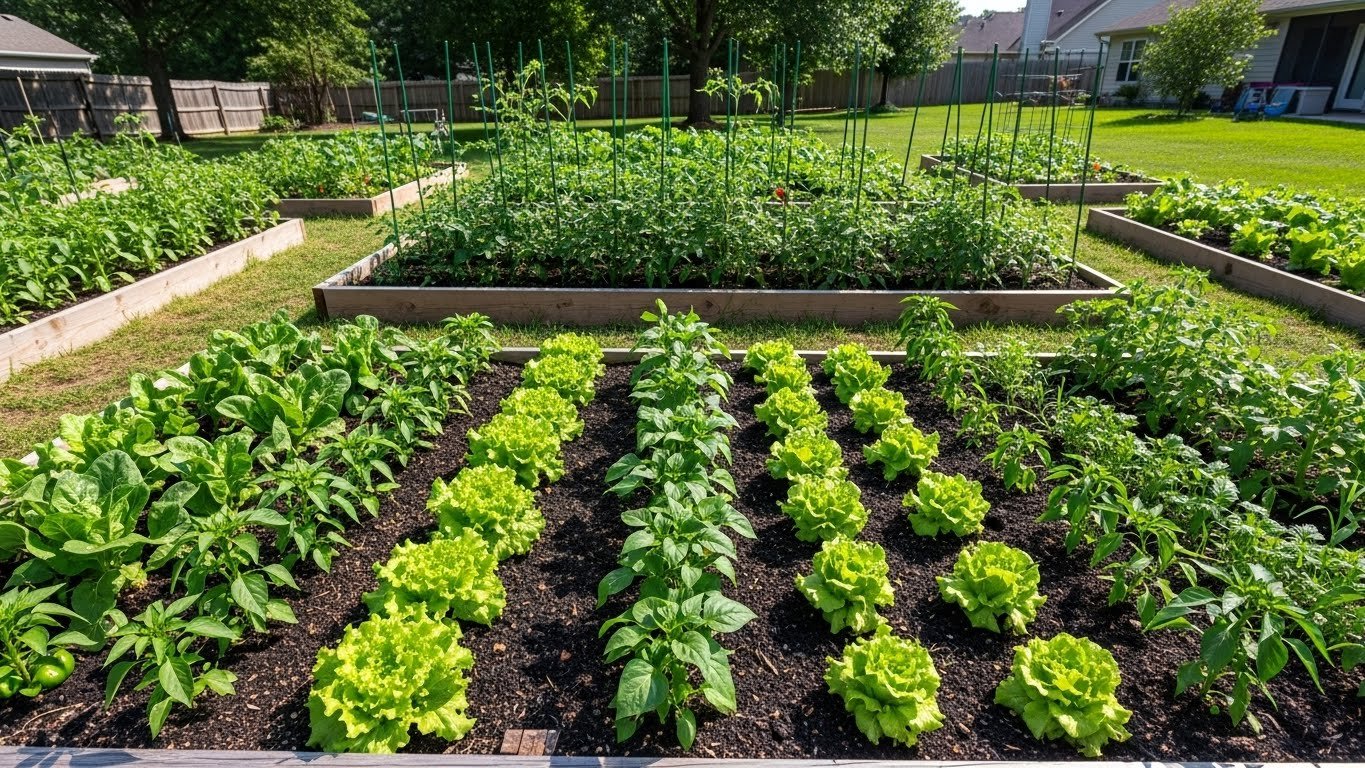
Raised bed garden mistakes are one of the main reasons vegetables fail—even when gardeners do everything else right.
Raised beds offer better drainage, warmer soil, and higher yields, but only when they are built and managed correctly. If your vegetables are stunted, yellowing, or dying, chances are one or more of the mistakes below is silently killing your plants.
This guide explains the most common raised bed garden mistakes, why they happen, and exactly how to fix them for healthier, more productive gardens across the USA and Canada.
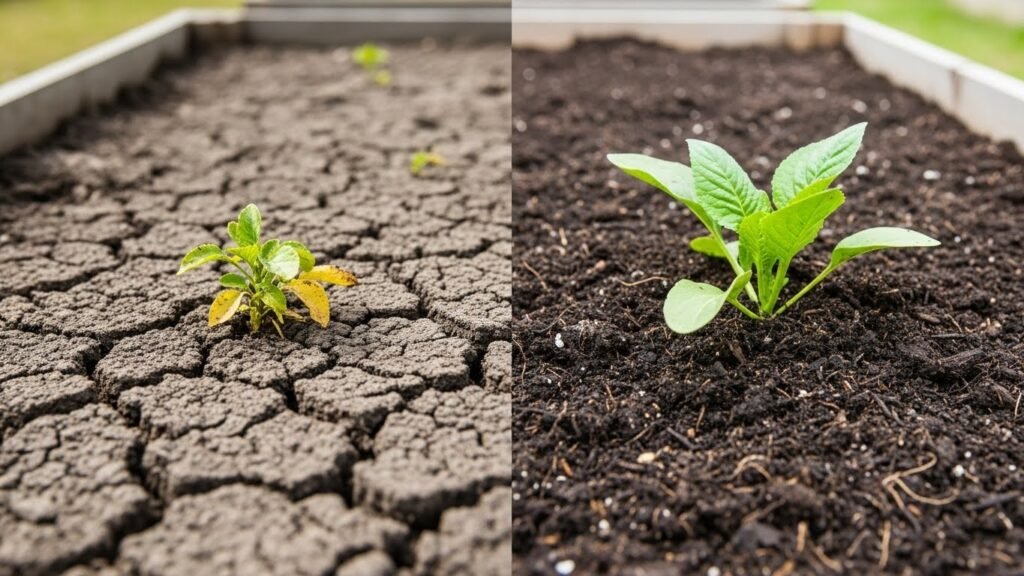
Using the Wrong Soil Mix in Raised Beds
Why this mistake kills vegetables
Raised beds rely entirely on soil quality. Using the wrong soil leads to:
- Compaction
- Poor drainage
- Root rot
- Nutrient lockout
Many gardeners fill raised beds with plain garden soil or cheap “topsoil,” which quickly becomes dense and waterlogged.
How to fix it
Use a balanced soil mix:
- 40–50% compost
- 30–40% quality topsoil
- 10–20% aeration material (perlite, coarse sand, pine fines)
If plants are already struggling, refresh the top 6–8 inches instead of replacing all the soil.
5 Costly Mistakes to Avoid When Building Your Raised Bed Garden
Raised Beds That Are Too Shallow
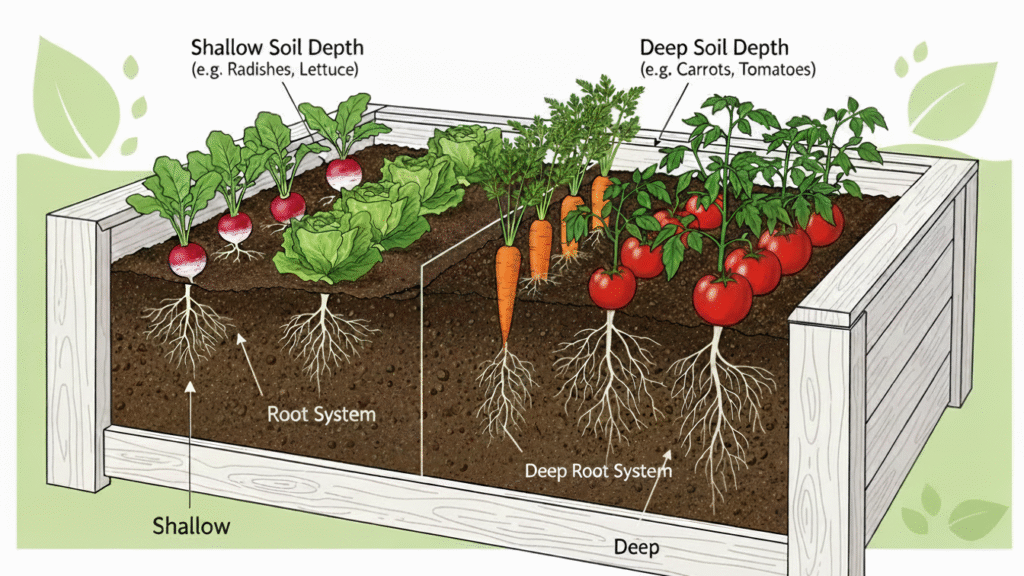
Another common raised bed mistake is building beds that are too shallow for vegetable roots.
Why shallow beds cause problems
- Roots hit a hard barrier and stop growing
- Plants dry out faster
- Vegetables become stunted or weak
- Yield drops dramatically
Minimum depth guidelines
| Vegetable Type | Ideal Depth |
|---|---|
| Leafy greens | 6–8 inches |
| Root vegetables | 10–12 inches |
| Tomatoes, peppers | 12–18 inches |
| Squash, cucumbers | 12–18 inches |
Many beginner gardeners use beds that are only 6 inches deep—fine for lettuce, but disastrous for most vegetables.
How to fix it
- Add soil height if possible
- Grow shallow-root crops only
- Loosen soil underneath beds placed on ground
Depth matters more than bed width when it comes to plant health.
Overwatering Raised Beds (Yes, It Happens)
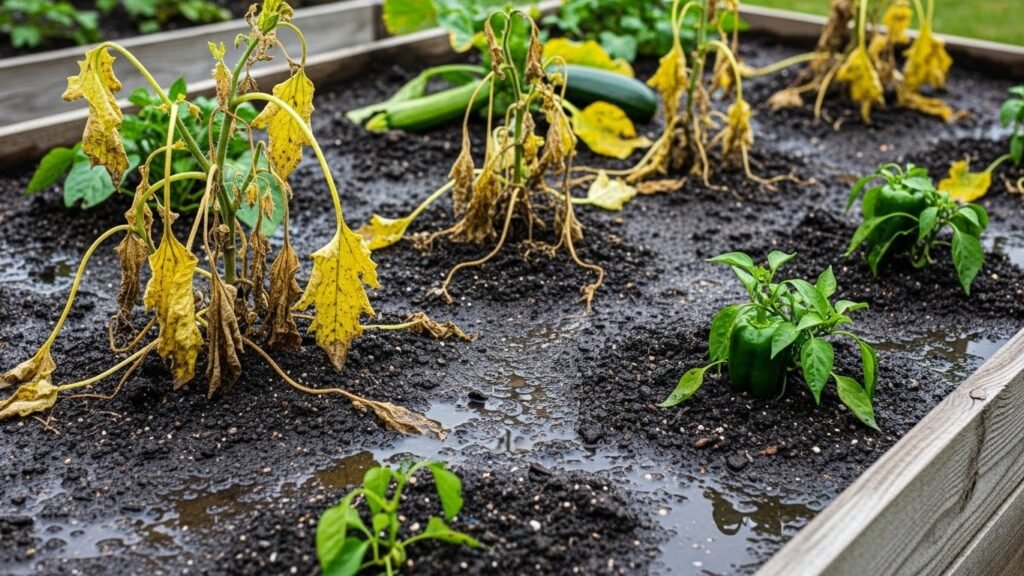
Raised beds drain faster than in-ground gardens—but that doesn’t mean they need constant watering.
Why overwatering kills vegetables
- Roots suffocate from lack of oxygen
- Soil stays soggy below the surface
- Root rot develops quickly
- Nutrients wash out
Signs of overwatering in raised beds
- Yellowing leaves
- Wilting despite wet soil
- Mushy stems near soil line
- Fungus gnats or mold
Many gardeners water on a schedule instead of checking soil moisture.
How to fix it
- Water deeply, less frequently
- Check soil 2–3 inches down before watering
- Improve drainage with compost and aeration
- Mulch to regulate moisture
If you suspect water damage, stop watering for a few days and allow soil to dry slightly before resuming.
Not Enough Sunlight for Vegetables
Vegetables are sun-hungry plants, and raised beds placed in the wrong location struggle no matter how good the soil is.
Minimum sunlight requirements
- Most vegetables: 6–8 hours of direct sun
- Tomatoes, peppers: 8+ hours
- Leafy greens: minimum 4–5 hours
Common sunlight mistakes
- Placing beds near fences or buildings
- Ignoring tree shade as seasons change
- Assuming partial sun is “good enough”
How to fix it
- Observe sun patterns before building beds
- Trim or manage nearby shade sources
- Grow shade-tolerant crops where full sun isn’t possible
Sunlight problems often look like nutrient deficiencies but can’t be fixed with fertilizer.
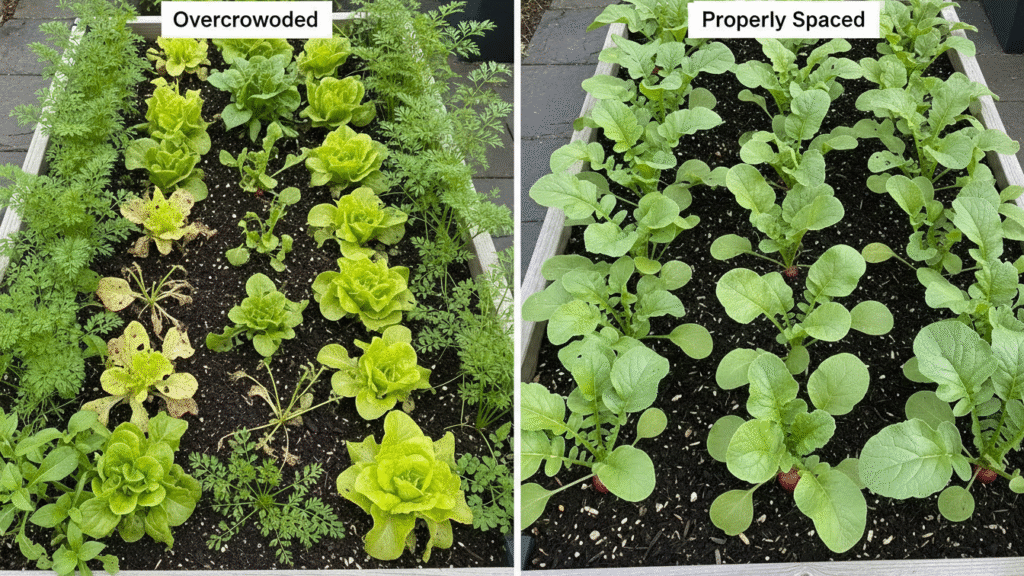
Poor Plant Spacing (Crowding Vegetables)
Overcrowding is one of the most underestimated raised bed gardening problems.
Why poor spacing kills plants
- Roots compete for water and nutrients
- Airflow drops → disease spreads
- Plants grow tall and weak
- Harvest size shrinks
Common spacing mistakes
- Planting too many seedlings
- Ignoring spacing recommendations
- Treating raised beds like containers
Basic spacing guide
| Vegetable | Spacing |
|---|---|
| Lettuce | 6–8 inches |
| Carrots | 2–3 inches |
| Tomatoes | 18–24 inches |
| Peppers | 12–18 inches |
How to fix it
- Thin seedlings early
- Follow spacing, not plant count
- Grow fewer plants—but healthier ones
More space almost always equals better yields.
Ignoring Climate and Growing Zones
Raised beds don’t override climate. Ignoring USDA zones is a silent plant killer.
Why this matters
- Planting too early risks frost damage
- Late planting shortens harvest window
- Heat stress affects root zones faster in beds
According to university extension gardening resources, planting timing and frost risk vary widely across regions.
Gardeners in colder areas should also review our cold climate gardening guide for zone-specific strategies.
How to Fix Raised Bed Problems (Step-by-Step)
If your vegetables are already struggling, don’t panic.
Recovery plan
- Identify the main issue (soil, water, sun, spacing)
- Improve soil structure with compost
- Adjust watering schedule
- Thin crowded plants
- Add mulch to stabilize moisture
- Avoid fertilizing stressed plants immediately
Most raised bed issues can be corrected within 2–3 weeks if caught early.
Common Raised Bed Garden Mistakes to Avoid
- Using landscape fabric that blocks drainage
- Filling beds with pure compost
- Planting warm-season crops too early
- Over-fertilizing stressed plants
- Ignoring seasonal weather changes
Avoiding these mistakes often matters more than buying expensive products.
Frequently Asked Questions (FAQ)
Can raised bed soil be reused?
Yes. Refresh it each season with compost and organic matter. Replace only if soil is diseased or severely compacted.
How often should raised beds be watered?
Typically 2–3 times per week, depending on weather, soil mix, and plant size. Always check soil moisture first.
What is the ideal depth for raised beds?
For most vegetables, 12–18 inches provides the best balance of root growth, moisture control, and nutrient access.
Conclusion
Raised beds are incredibly effective—but only when built and managed correctly.
By avoiding these raised bed garden mistakes, adjusting soil and watering practices, and respecting climate conditions, you can turn failing beds into productive, healthy vegetable gardens.
If you’re serious about improving results, explore our seasonal gardening resources and related raised bed guides to build long-term success.