
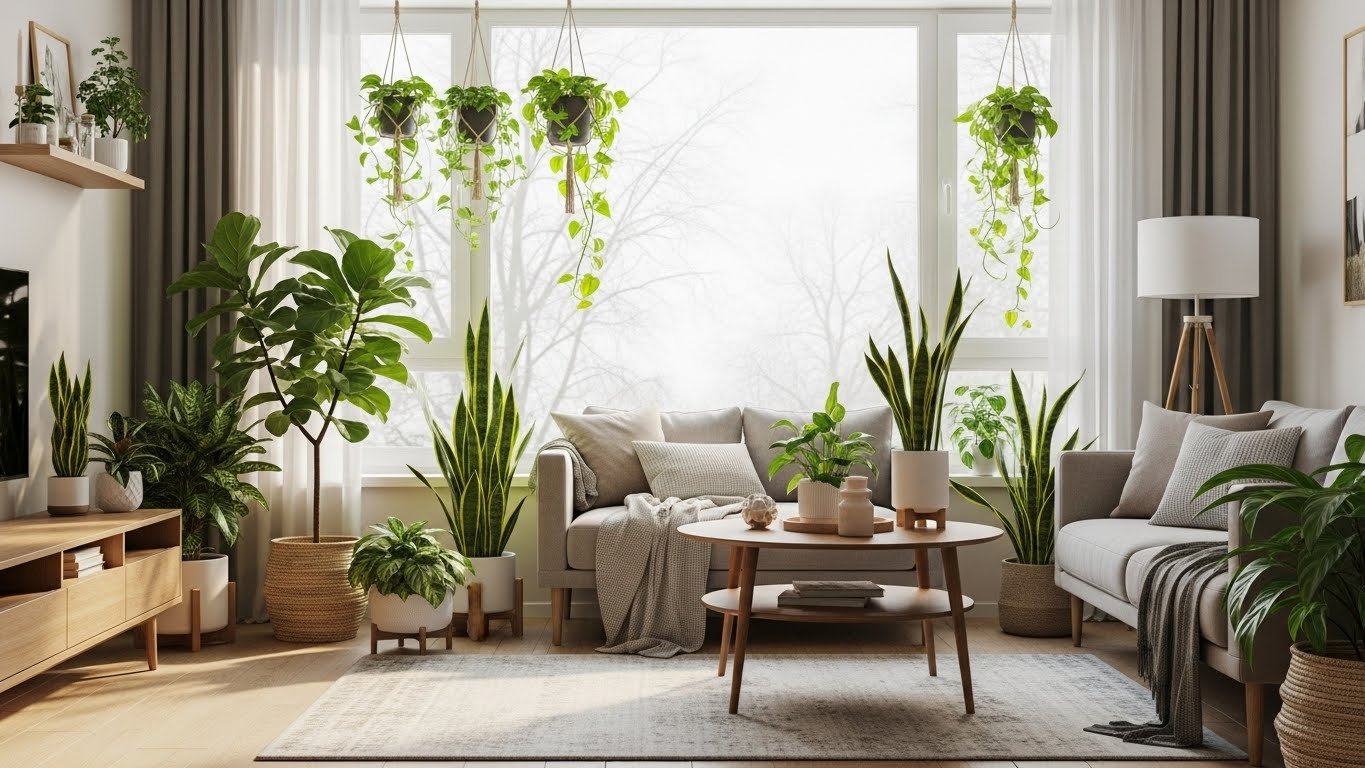
Winter is one of the toughest seasons for houseplants. Shorter days, weaker sunlight, dry indoor air, and cooler temperatures slowly stress plants—even when they looked perfectly healthy in autumn.
Proper winter indoor plant care is not about doing more work. It’s about adjusting habits to match how plants behave in colder months. Most winter plant problems happen because people continue summer routines, especially with watering and light.
This practical checklist focuses on simple, proven adjustments that work in real homes, helping indoor plants survive winter and return stronger in spring.
Winter Indoor Plant Care: Reduce Watering First
Watering mistakes cause more winter plant damage than anything else.
During winter:
- Plant growth slows
- Soil dries out much more slowly
- Roots need oxygen more than moisture
What to do instead:
- Let the top 2–3 inches of soil dry before watering
- Always empty saucers after watering
- Never water on a fixed schedule
If soil stays cold and wet for several days, roots may begin to suffocate.
Link the phrase overwatered plants to your Overwatered Plants: Signs, Rescue & Prevention post.
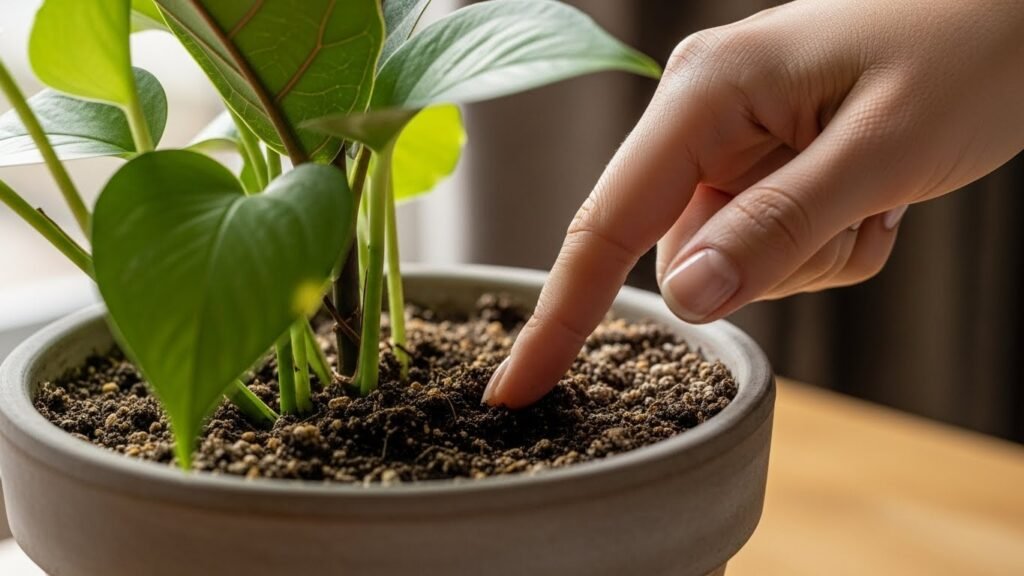
According to the University of Minnesota Extension’s watering guidelines, indoor plants moved indoors for the winter typically need much less water — and checking soil moisture before watering is key to preventing root rot and overwatering problems.
Adjust Light for Shorter Winter Days
Winter sunlight is weaker and lasts fewer hours, especially in northern regions.
Signs of low-light stress:
- Pale or yellowing leaves
- Slow or leggy growth
- Gradual leaf drop
How to help plants cope:
- Move plants closer to bright windows
- Use south- or west-facing light when available
- Clean dusty leaves so plants absorb more light
Even a few extra hours of brighter light can noticeably improve plant health.
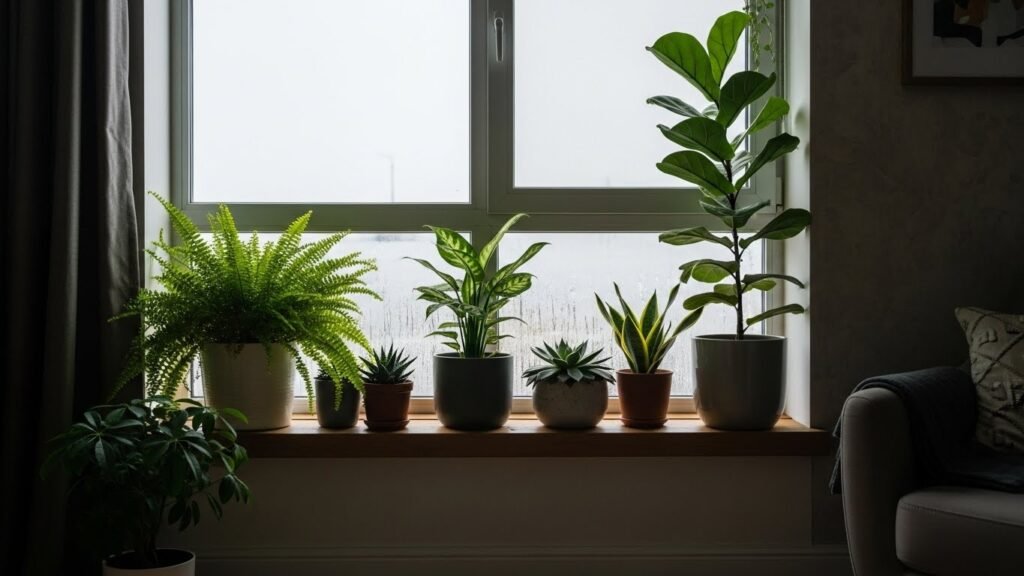
The Royal Horticultural Society (RHS) explains that reduced winter light significantly slows plant growth and water use.
The Iowa State University Extension notes that it is easy to overwater houseplants if watering frequency isn’t adjusted for changes in light, temperature, and humidity, making soil checks and well-timed watering essential for healthy plants.
Increase Humidity (Dry Air Is a Silent Winter Problem)
Indoor heating drastically lowers humidity levels.
Plants most affected include:
- Tropical houseplants
- Ferns
- Calatheas
- Monsteras
Effective ways to increase humidity:
- Group plants together
- Use pebble trays with water
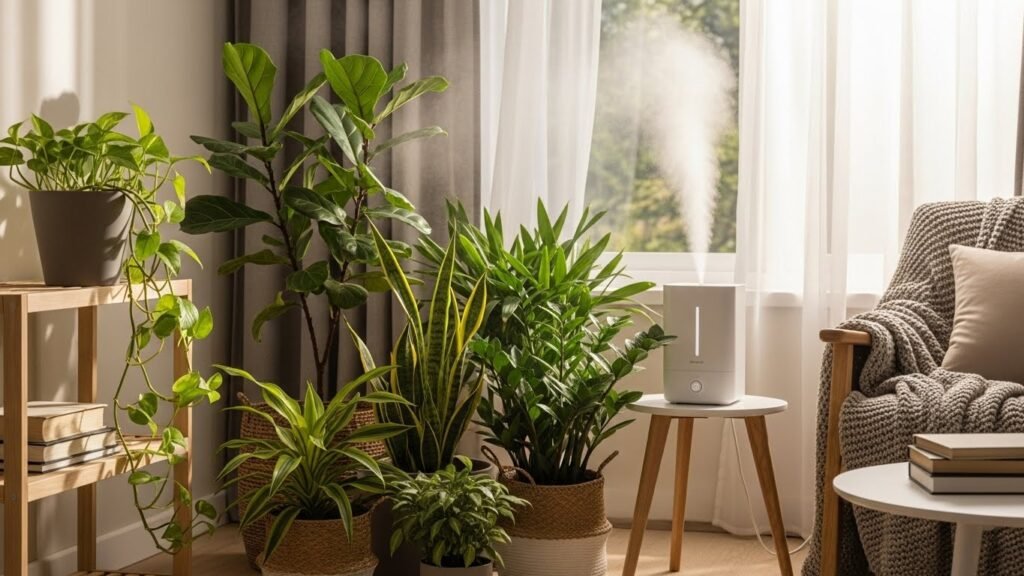
- Run a small humidifier nearby
Daily misting usually doesn’t raise humidity enough and may encourage fungal issues.
Protect Plants From Cold Drafts
Cold air damages indoor plants faster than most people expect.
Common problem areas:
- Drafty windows and doors
- Plants touching cold glass
- Heat vents blowing directly on foliage
Best practices:
- Move plants a few inches away from windows at night
- Keep plants away from radiators and heaters
- Maintain stable room temperatures
Sudden temperature changes often lead to leaf drop.
Stop Fertilizing Until Spring
Most indoor plants slow down or rest during winter.
Fertilizing during this period:
- Burns stressed roots
- Causes weak, uneven growth
- Does not improve plant health
What to do:
- Pause fertilizing completely
- Resume feeding in early spring when new growth appears
Slow winter growth is normal—don’t try to force it.
Check Drainage and Soil Health
Many winter problems begin below the soil surface.
Quick checks:
- Pots must have drainage holes
- Soil should feel airy, not compacted
- No sour or moldy smell
If soil stays soggy:
- Repot into fresh, well-draining mix
- Add perlite or bark to improve airflow
Healthy roots matter more than perfect leaves.
Watch for Winter Pests
Dry air and stressed plants attract pests.
Common winter pests:
- Spider mites
- Fungus gnats
- Mealybugs
Prevention tips:
- Inspect leaves weekly
- Wipe foliage with a damp cloth
- Isolate affected plants early
Early detection prevents infestations from spreading.
8. Choose Plants That Handle Winter Better
Some plants naturally tolerate winter conditions more easily.
Winter-friendly indoor plants:
- Snake plant
- ZZ plant
- Pothos
- Cast iron plant
Low-light, slow-growing plants need fewer adjustments and are ideal for winter homes.
Indoor Plant Care Differences by Region
USA & Canada
- Heating systems dry indoor air quickly
- Winter daylight hours drop sharply
- Cold drafts near windows are common
Europe
- Cooler indoor temperatures
- Lower light levels in northern regions
- Humidity varies by climate and building type
Across all regions, light, water, and humidity are the three most important winter factors.
Conclusion:
Good winter indoor plant care is about responding to seasonal changes instead of fighting them.
Following a simple winter indoor plant care routine helps prevent common problems like overwatering, low-light stress, and pest outbreaks—allowing indoor plants to survive winter and return stronger in spring.
How often should I water indoor plants during winter?
Most indoor plants need significantly less water in winter because growth slows and soil dries more slowly. Instead of following a schedule, always check soil moisture first. Let the top few inches of soil dry out before watering again.
Should I fertilize indoor plants in winter?
Yes, some leaf drop is normal during winter. Reduced light, dry air, and temperature changes can cause plants to shed older leaves. However, excessive leaf drop combined with wet soil may indicate overwatering or root stress.
Should I fertilize indoor plants in winter?
In most cases, no. Indoor plants usually enter a resting phase during winter. Fertilizing during this time can burn roots and cause weak growth. Resume feeding in early spring when new growth appears.
Do indoor plants need more light during winter?
Yes. Winter days are shorter and sunlight is weaker, especially in northern regions. Moving plants closer to windows or supplementing with grow lights can help prevent low-light stress.
Why do indoor plants struggle more during winter heating?
Indoor heating lowers humidity levels, which stresses many houseplants. Dry air can lead to brown leaf edges, pest problems, and slower growth. Increasing humidity is one of the most important winter care steps.
Can indoor plants recover after winter stress?
Most indoor plants recover well in spring if winter stress is managed early. Adjusting watering, improving light, and avoiding fertilizer during winter helps plants bounce back once temperatures and daylight increase.
1 Comment
Pingback: How Often to Water Indoor Plants (Complete Beginner’s Guide)