
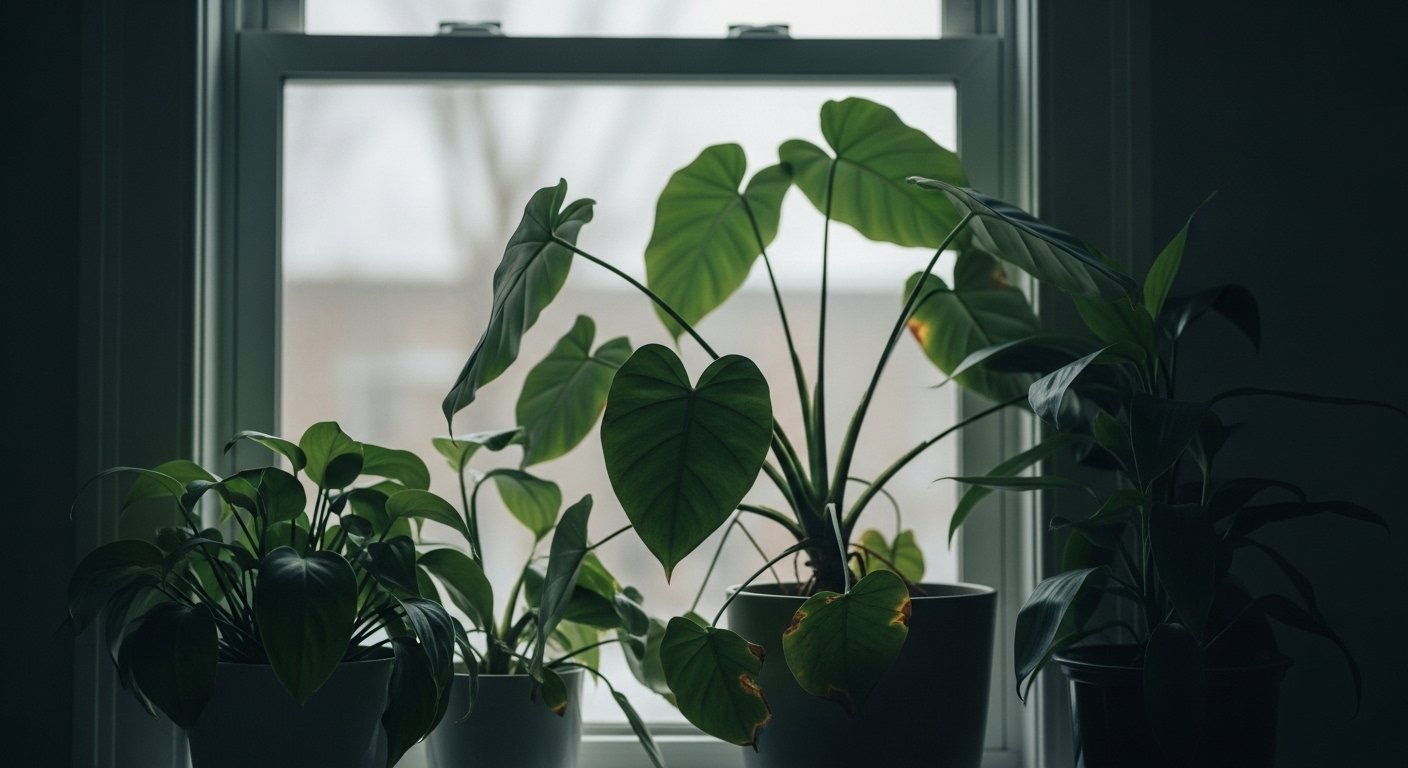
Plants in indoors do not die because of winter.
It is transforming all that they rely on gradually.
The Mistake Almost Every Home Makes in Winter
Most individuals put the blame on the season when winter comes.
Cold weather. Short days. Weak sunlight.
However, indoor plants do not perish since it is winter.
They have problems since conditions at home relate to changes at a faster rate than the plants.
And the transformations are so insidious that most individuals do not pay attention to it.
What Actually Changes Indoors During Winter
Your vegetation may be in the same pot.
In the same spot.
Getting the same care.
However its surrounding is totally different.
Light Becomes Shorter and Weaker
Even near a window, winter light:
- Arrives at a lower angle
- Lasts fewer hours
- Has less energy
When the light is reduced, plants consume less water.
But the majority of the people continue to water in the same fashion.
Such an imbalance would bring stress well before leaves change to yellow.
Indoor Heating Dries the Air
Home heating systems enable people to stay comfortable in their homes as opposed to plants.
Warm air holds less moisture.
Humidity drops quietly.
Plants respond by:
- Losing leaf tension
- Slowing growth
- Conserving energy
This usually appears as though nothing is wrong in the first place.
Day–Night Temperature Swings
Winter homes often have:
- Warm days
- Cold nights near windows
There is also a stress on roots and leaves in that swing.
Plants prefer stability.
Why Plants Look Fine While Declining
TIt is this that causes winter damage to be misleading.
Maintenance does not manifest at once in plants.
They reduce activity first.
You may notice:
- Still green leaves, but of less substance.
- Decreasing growth or stagnation.
- A general flat look
As no dramatic destruction is the case, people wait.
The time of yellowing has already been several weeks under its spell.
The One Thing That Makes Winter So Dangerous
Winter stress is quiet.
There’s no single mistake.
No clear point at which something has gone astray.
Instead, it’s a combination of:
- Less light
- Dry air
- Routine habits which have outgrown.
In winter, plants do not require extra attention.
They need different care.
What Not to Do in Winter
Most people are instinctive when the plants suffer during winter.
They:
- Water more
- Add fertilizer
- Move plants repeatedly
These measures make stress more intense.
During the winter plants are storing up energy.
Physical exertion increases the difficulty of recovery.
What Actually Helps Indoor Plants in Winter
Big fixes are not as significant as small adjustments.
Pause and observe
In case the leaves appear wet or exhausted, cease to react.
Allow the time of the plant to relax under a constant environment.
Let soil dry slightly more
Less sunlight means less water consumption.
Wet soil during winter belongs to the most frequent causes of the decline.
Protect from extreme spots
Avoid drafts, night, cold glass, heaters.
Unity is greater than consistency.
Why Winter Problems Carry Into Spring
A good number of spring problems associated with plants begin during winter.
Poor roots do not all at once come to life.
Plants stressed do not recover overnight.
That is why plants which survive winters still have difficulties months later.
When the calendar spins on to winter, winter still does not stop.
Its effects linger.
The Big Truth About Winter Plant Care
Winter isn’t the enemy.
Overall environmental change is undetected.
Plants which are indoors are tough and slow in adapting.
Care will get simpler and more relaxed when we can know what is causing those changes around them.
When a plant is doing poorly during winter it is not failing.
It’s adjusting.
The Big Takeaway
Majority of issues with plants during winter do not begin with damages.
They begin with minor changes that can be overlooked.